

How to Clean Concrete: The Complete Guide for Driveways, Sidewalks, and Patios
Dirty concrete can make any property look neglected. Learn how professionals clean concrete surfaces safely and effectively, plus which tools and accessories help deliver faster, more consistent results.
Concrete surfaces take a beating year-round. Oil stains, tire marks, algae, mildew, rust, and dirt all build up over time, leaving driveways, sidewalks, patios, and commercial spaces looking worn and neglected.
The good news is that concrete responds extremely well to proper cleaning techniques. With the right process and equipment, you can dramatically improve appearance, extend the life of the surface, and achieve professional-level results without damaging the concrete.
This guide breaks down how to clean concrete effectively, when to use pressure washing versus soft washing, and which tools help make the job faster and more efficient.
Why Concrete Gets So Dirty
Concrete is porous, meaning it absorbs contaminants over time. Dirt and organic growth settle deep into the surface, especially in shaded or high-traffic areas.
Common concrete contaminants include:
- Algae and mildew
- Tire marks
- Oil and grease stains
- Rust stains
- Dirt and mud buildup
- Organic growth and discoloration
Simply rinsing the surface with water usually is not enough. Proper cleaning requires the right combination of pressure, flow, chemicals, and surface coverage.
Step 1: Pre-Treat the Surface
One of the biggest mistakes people make when cleaning concrete is relying on pressure alone.
Professional contractors often pre-treat concrete with a soft wash or degreasing solution before surface cleaning. This helps break down organic buildup and stains so the pressure washer can clean more efficiently.
For algae, mildew, and organic staining, a soft wash solution with sodium hypochlorite can help loosen buildup before cleaning. For oil stains, a degreaser may be required.
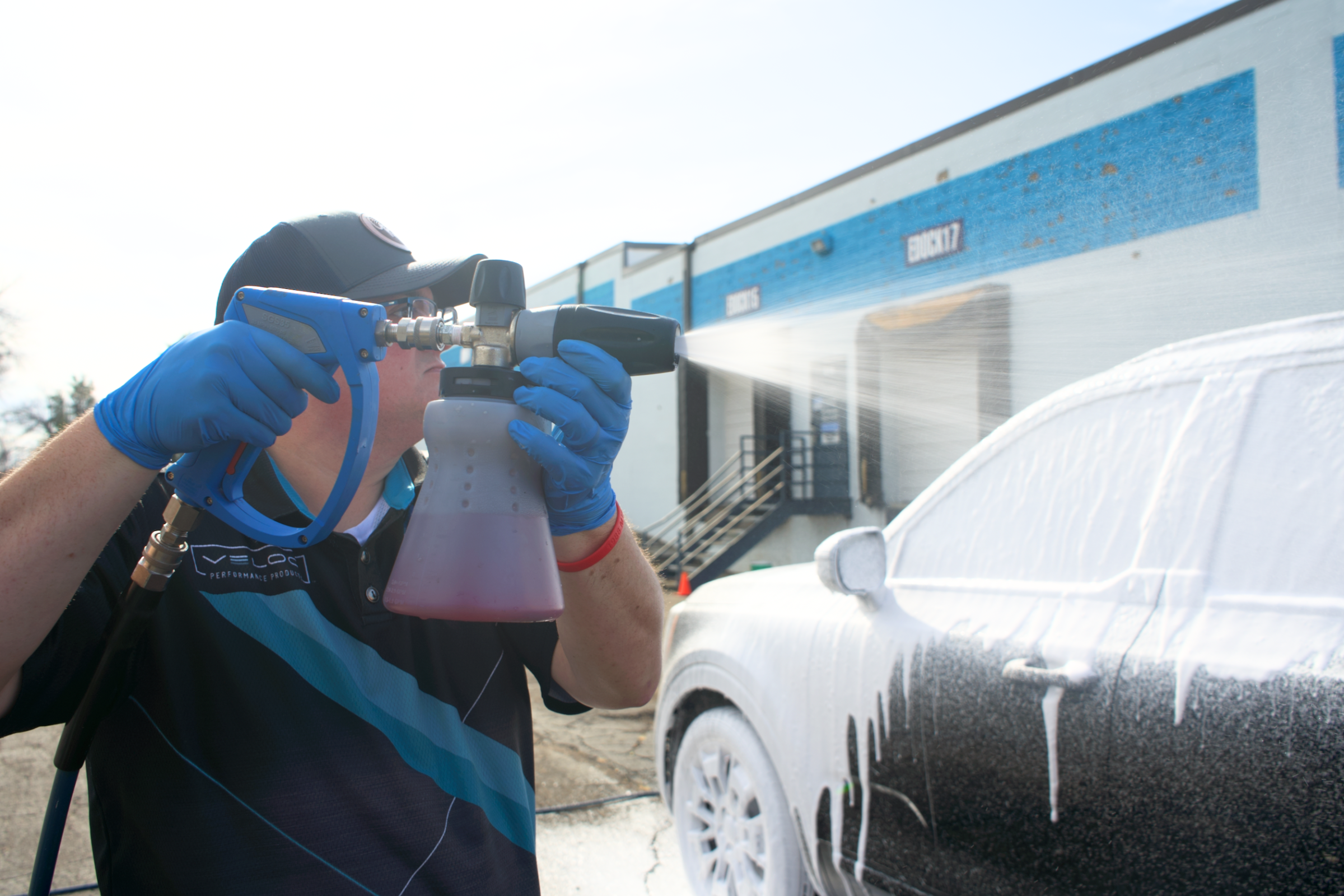
Applying chemicals evenly matters. Using a foam cannon like the patented MTM Hydro PF22 Foam Cannon helps create consistent chemical coverage and better dwell time before rinsing.
The PF22’s adjustable spray pattern makes it easy to apply chemicals across wide concrete surfaces quickly and evenly.
Step 2: Use the Right Pressure Washer Setup
Concrete cleaning requires more flow and surface coverage than vehicle detailing or siding washing.
For best results, contractors typically use:
- A pressure washer with adequate GPM
- A surface cleaner for flatwork
- High-quality hose and fittings
- Correct nozzle selection
Flow rate matters just as much as PSI. Higher GPM helps flush contaminants away faster and improves cleaning efficiency.
Reliable hose performance is also critical during long concrete cleaning jobs. KobraJet Smooth Blue Hoses are a popular choice because they resist kinking, drag easily across surfaces, and maintain flexibility during extended use.
Pairing a quality hose with Prima Stainless Steel Fittings helps reduce leaks and pressure loss while improving overall durability.
Step 3: Clean with a Surface Cleaner
For large concrete areas, a surface cleaner is one of the most important tools you can use.
Surface cleaners deliver:
- More even cleaning
- Faster production rates
- Reduced striping
- Better operator control
HydroJet Surface Cleaners are designed to clean large flat surfaces efficiently while maintaining consistent pressure distribution. Compared to cleaning concrete with only a wand, a surface cleaner dramatically improves productivity and creates a more uniform finish.
It is important to use the lowest PSI necessary to achieve the desired result. Excessive pressure can permanently etch concrete and leave visible wand marks or striping.
Professional concrete cleaning is about controlled cleaning power, not maximum pressure.
Step 4: Treat Stubborn Stains Separately
Some stains require extra attention.
Oil and Grease
Oil stains often need a dedicated degreaser and multiple treatments. Allow chemicals time to dwell before rinsing.
Rust Stains
Rust removers formulated for concrete can help break down oxidation stains without excessive pressure.
Organic Growth
Post-treating concrete with a soft wash solution after surface cleaning helps brighten the surface and eliminate remaining organic matter deep within the pores.
This step is especially important for driveways, patios, and sidewalks in shaded environments where algae tends to return quickly.
Step 5: Use the Right Nozzle and Spray Gun
Even with a surface cleaner, detail work still matters around edges, corners, stairs, and tight areas.
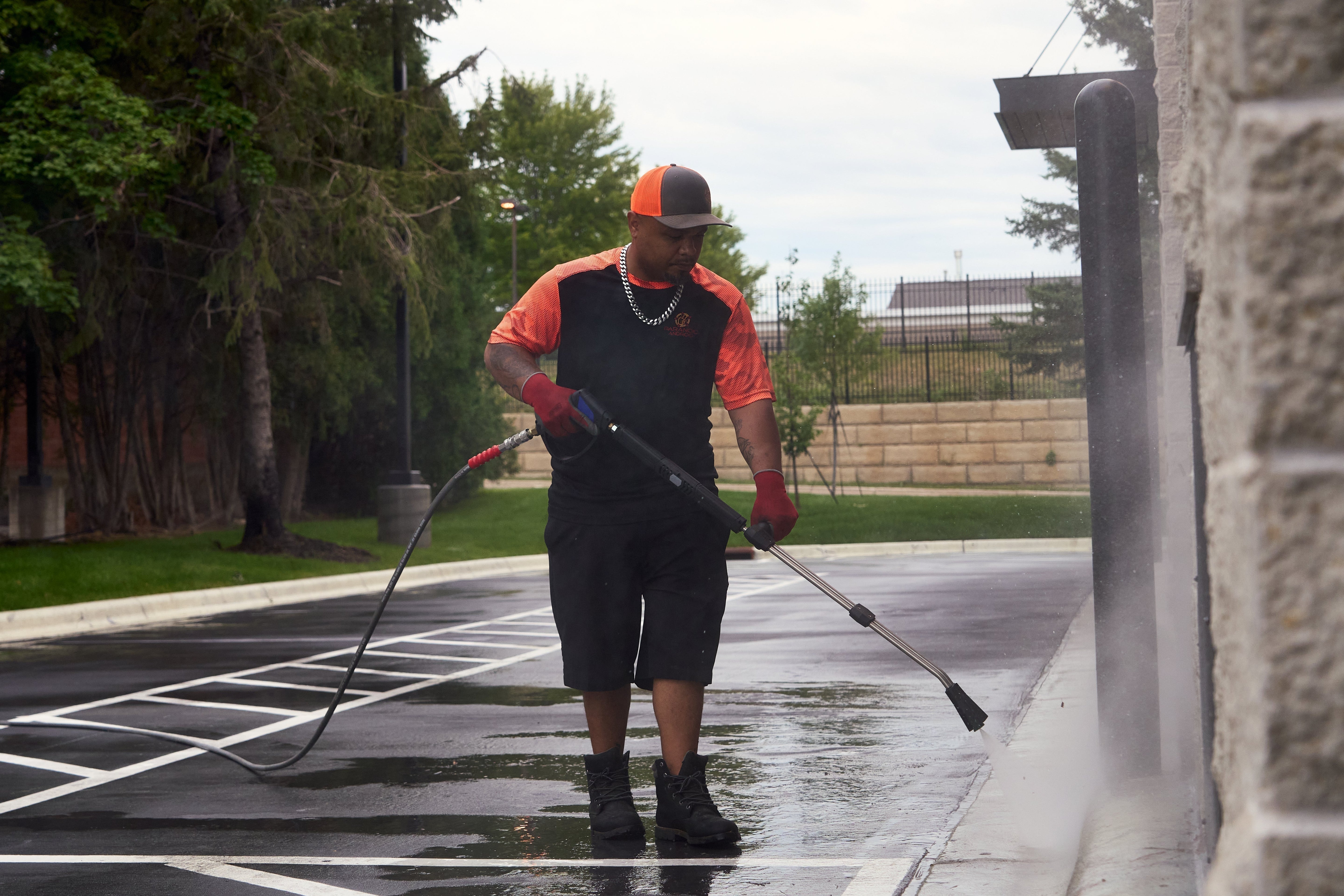
Using the correct spray gun and nozzle setup improves control and reduces fatigue during long cleaning sessions.
The MTM Hydro SGS28 Spray Gun is a strong option for concrete cleaning applications because of its integrated stainless live swivel, which allows the hose to rotate under pressure. This helps reduce hose kinks and improves maneuverability around driveways and commercial flatwork.
Its Easy Pull trigger also reduces operator fatigue during extended jobs.
For contractors who want additional durability and ergonomic comfort, the MTM Hydro SGS35 Spray Gun includes reinforced housing, integrated stainless quick connects, and a stainless live swivel for smoother operation.
Pairing these spray guns with quality nozzles and stainless fittings creates a more efficient system overall.
Common Mistakes When Cleaning Concrete
Using Too Much Pressure
Higher PSI does not always mean better results. Excessive pressure can damage concrete and leave permanent marks.
Skipping Pre-Treatment
Chemical dwell time is often what removes organic buildup effectively. Pressure alone is rarely enough.
Using Poor-Quality Fittings
Leaks and pressure loss reduce cleaning efficiency. Upgrading to stainless fittings helps maintain consistent flow.
Cleaning Unevenly
Moving too slowly or too quickly with a wand can create striping. Surface cleaners help maintain even coverage.
Residential vs Commercial Concrete Cleaning
Residential concrete cleaning often focuses on appearance and curb appeal. Driveways, patios, pool decks, and sidewalks benefit from routine maintenance to prevent staining and buildup.
Commercial concrete cleaning places more emphasis on safety and presentation. Gas stations, storefronts, parking garages, and walkways require consistent maintenance to reduce slip hazards and maintain a professional appearance.
In both cases, using professional-grade equipment improves speed, consistency, and long-term results.
Final Thoughts
Cleaning concrete effectively requires more than simply blasting the surface with pressure. The best results come from combining proper chemical application, controlled pressure, quality accessories, and efficient surface cleaning equipment.
Whether you're maintaining residential concrete or tackling large commercial jobs, investing in the right tools makes a major difference in cleaning speed, surface safety, and overall results.
From HydroJet Surface Cleaners and KobraJet hoses to Prima Stainless Steel Fittings and professional spray guns like the SGS28 and SGS35, building a reliable setup helps you clean more efficiently and deliver better results on every job.