


How to Clean Wood and Composite Decking Without Causing Damage
A clean deck enhances your outdoor living space and extends the life of your investment. Learn the best way to clean wood and composite decking while avoiding common mistakes that can cause permanent damage.
A deck is one of the most-used outdoor spaces around the home, but it is also one of the easiest to overlook when it comes to routine maintenance. Exposure to rain, sunlight, dirt, pollen, leaves, and organic growth can leave wood and composite decking looking weathered long before its time.
Fortunately, regular cleaning can restore your deck's appearance and help extend its lifespan. The key is understanding that wood and composite decking require different cleaning methods. Using too much pressure or the wrong equipment can permanently damage the surface.
Whether you are maintaining your own backyard or cleaning decks professionally, this guide explains how to clean wood and composite decking safely while achieving outstanding results.
Why Regular Deck Cleaning Matters
Decking is constantly exposed to the elements. Moisture trapped beneath leaves and debris encourages algae, mildew, and mold growth, while foot traffic grinds dirt into the surface.
Routine cleaning helps:
- Restore the deck's appearance
- Reduce slippery organic buildup
- Prepare surfaces for staining or sealing
- Extend the life of wood and composite materials
- Prevent costly repairs caused by moisture retention
For contractors, proper deck maintenance also creates opportunities for repeat business, as many homeowners benefit from annual cleaning.
Understand the Difference Between Wood and Composite Decking
Before selecting equipment or chemicals, identify the decking material.
Wood Decking
Natural wood is softer than concrete and can easily be damaged by excessive pressure.
Common wood species include:
- Cedar
- Redwood
- Pressure-treated pine
- Hardwood decking
Wood fibers can become fuzzy or permanently etched if cleaned with too much pressure or by holding the spray tip too close to the surface.
Composite Decking
Composite decking combines wood fibers with recycled plastics to create a more durable surface.
While composite boards resist rot and insect damage, they can still be scratched or scarred by improper pressure washing techniques.
Always follow the decking manufacturer's recommendations before cleaning.
Step 1: Remove Loose Debris
Start by removing leaves, branches, furniture, and other loose debris.
Sweep the surface thoroughly, paying close attention to gaps between deck boards where moisture and organic material often accumulate.
This simple step prevents unnecessary mess and allows cleaning solutions to reach the surface more effectively.
Step 2: Apply the Appropriate Cleaning Solution
One of the biggest mistakes homeowners make is relying entirely on pressure to clean a deck.
Professional contractors know that the right cleaning solution does much of the work.
For decks with algae, mildew, or organic staining, applying an appropriate cleaning solution allows contaminants to loosen before rinsing.
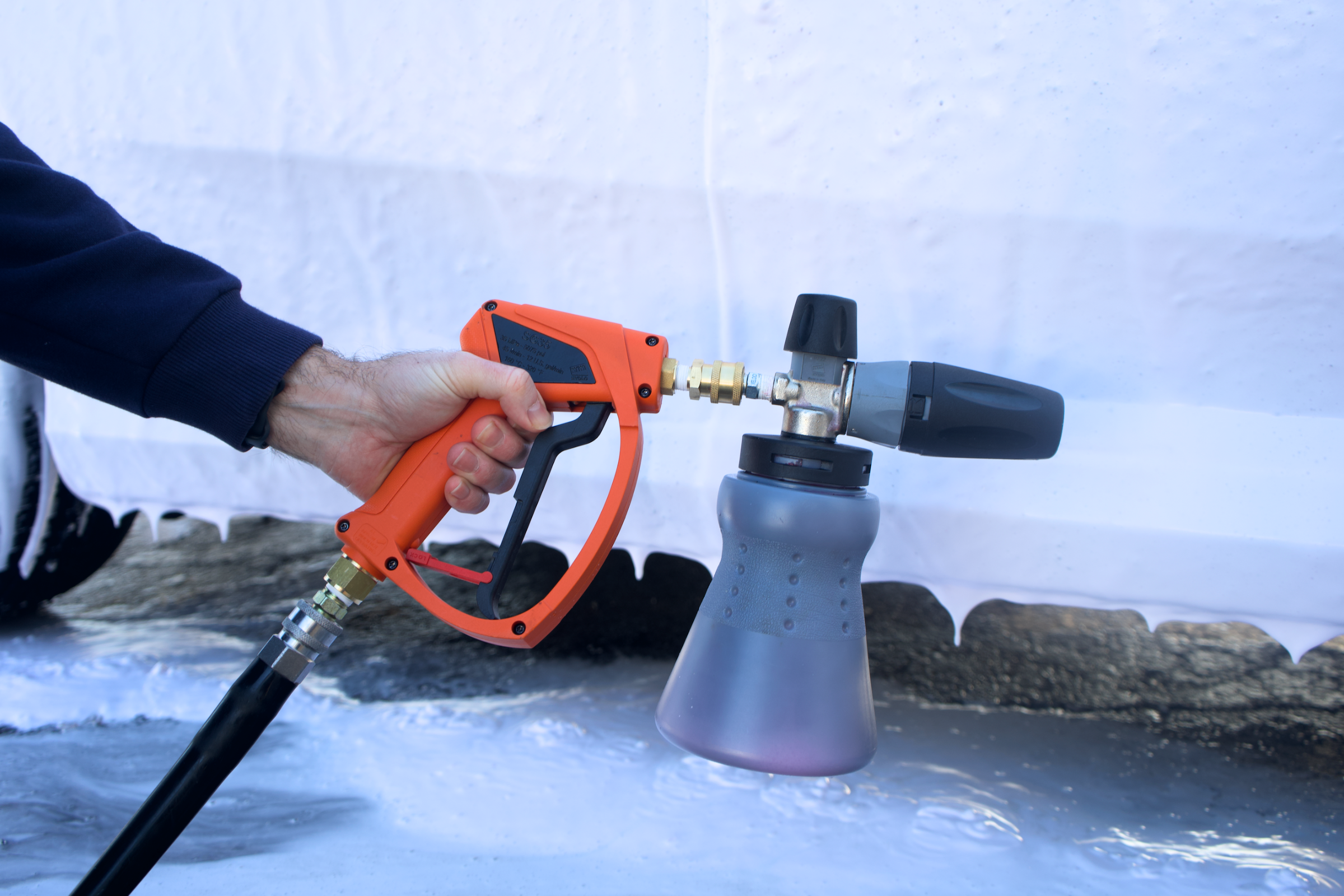
The patented MTM Hydro PF22 Foam Cannon makes chemical application quick and consistent. Its adjustable fan pattern lets you evenly coat railings, stairs, and deck boards while minimizing wasted product.
The redesigned wide-mouth bottle makes filling with deck cleaners easier and reduces spills during setup.
If you are working from a standard garden hose instead of a pressure washer, the MTM Hydro GHF1 Low Pressure Foamer provides an excellent alternative for applying cleaning solutions evenly across the deck.
Allow the cleaner to dwell according to the manufacturer's recommendations before rinsing.
Step 3: Use the Right Pressure
Pressure is where many deck cleaning projects go wrong.
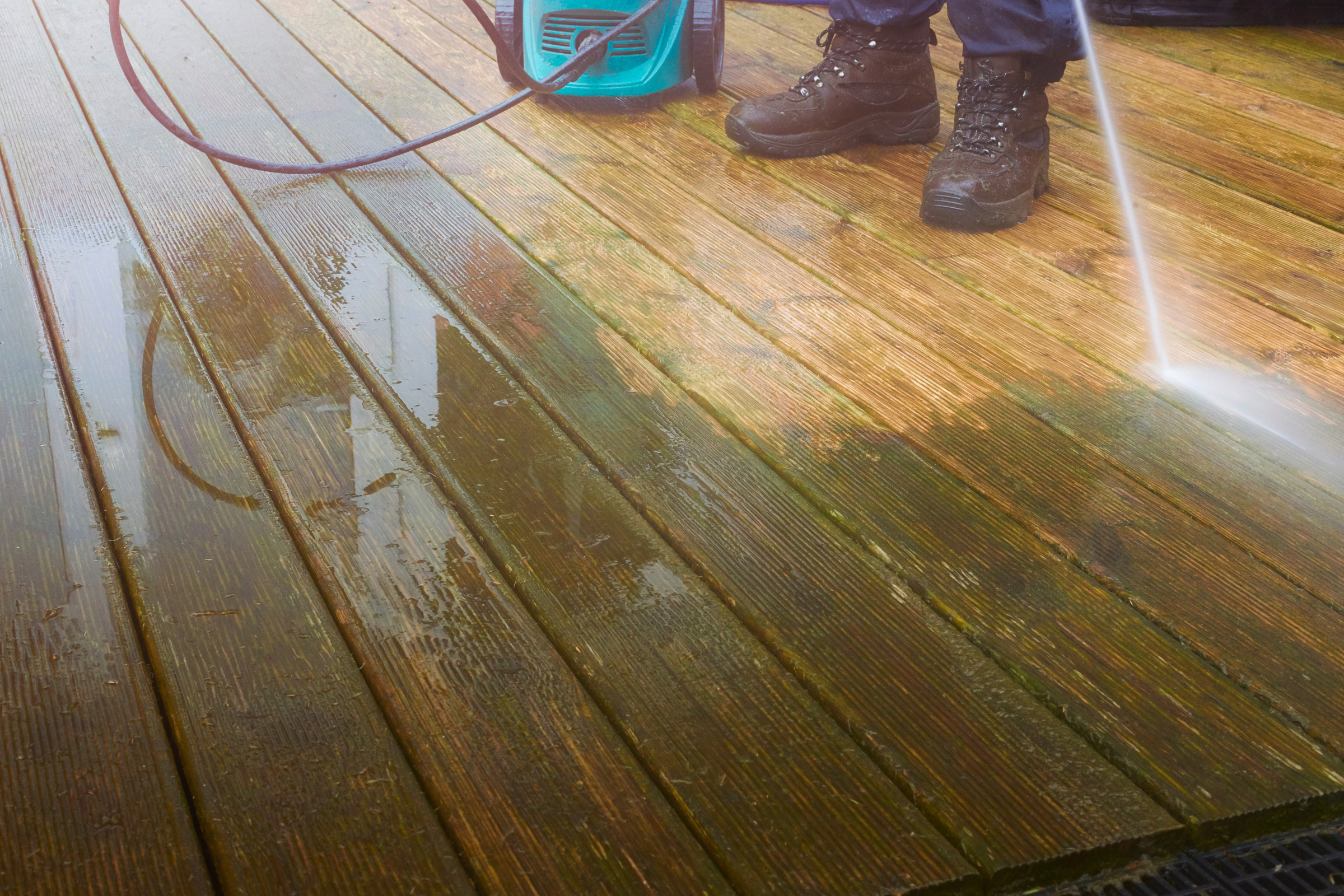
Wood decking typically requires significantly less pressure than concrete or brick. In many cases, 500 to 1,200 PSI is sufficient, depending on the wood species and condition.
Composite decking generally benefits from similarly low pressure, allowing cleaning solutions to do most of the work.
Rather than increasing pressure, focus on maintaining proper spray distance and using the correct nozzle.
Step 4: Choose the Right Spray Gun and Nozzle
A quality spray gun gives you better control over pressure and movement.
The MTM Hydro SGS28 Spray Gun features an integrated stainless steel live swivel that allows the hose to rotate under pressure, reducing hose twists while making it easier to clean around deck railings, stairs, and landscaping.
Its Easy Pull trigger helps reduce hand fatigue during longer residential or commercial cleaning jobs.
The MTM Hydro SGS35 offers similar benefits with reinforced housing, integrated stainless steel quick connects, and ergonomic Easy Hold technology designed for professional users who spend hours behind the trigger.
Pair either spray gun with an appropriately sized fan nozzle to create even cleaning patterns while minimizing the risk of surface damage.
Step 5: Rinse Evenly
When rinsing, keep the spray tip moving at a consistent speed.
Avoid stopping in one location, which can create uneven cleaning patterns or leave visible marks on wood surfaces.
Work with the direction of the deck boards whenever possible.
If additional cleaning is needed, repeat the chemical application rather than increasing pressure.
Professional results come from patience and technique, not excessive force.
Should You Use a Surface Cleaner?
Surface cleaners are outstanding tools for large concrete driveways and sidewalks, but they are generally not recommended for wood or composite decking.
The concentrated rotating spray pattern may damage softer decking materials if not specifically designed for those surfaces.
Instead, reserve your HydroJet Surface Cleaner for nearby patios, walkways, pool decks, or concrete entertaining areas surrounding the deck. Cleaning these adjacent surfaces at the same time creates a more polished final result and enhances the overall appearance of the outdoor space.
Build a Reliable Cleaning System
A dependable setup improves both cleaning performance and efficiency.
Professional contractors often pair their pressure washer with:
- MTM Hydro SGS28 or SGS35 spray guns for greater comfort and control
- KobraJet Smooth Blue Hoses for flexibility and reduced kinking
- Prima Stainless Steel Quick Connect Fittings for leak-free connections
- MTM Hydro PF22 Foam Cannon or GHF1 Low Pressure Foamer for even chemical application
KobraJet hoses are assembled at Veloci Performance Products' headquarters in Burnsville, Minnesota, while Prima stainless steel fittings are manufactured there, helping ensure consistent quality and dependable performance job after job.
Together, these components create a system that is easier to use, more reliable, and built for long-term performance.
Common Mistakes to Avoid
Even experienced users can damage decking if they are not careful.
Avoid these common mistakes:
- Using excessive pressure
- Holding the nozzle too close to the surface
- Using a zero-degree nozzle
- Skipping chemical pre-treatment
- Allowing cleaning solutions to dry before rinsing
- Cleaning wood against the grain
- Ignoring manufacturer recommendations for composite decking
Following proper techniques helps preserve both the appearance and structural integrity of your deck.
Final Thoughts
Cleaning wood and composite decking is about using the right combination of chemistry, technique, and equipment. Low pressure, proper dwell time, and quality accessories will produce better results than simply relying on maximum PSI.
Whether you're refreshing a backyard deck for the summer or maintaining outdoor spaces for customers, investing in professional-grade equipment makes every job easier. Products like the MTM Hydro PF22 Foam Cannon, GHF1 Low Pressure Foamer, SGS28 and SGS35 Spray Guns, KobraJet hoses, and Prima Stainless Steel Fittings help you clean more efficiently while protecting the surfaces you are working on.
With the right approach, you can restore the beauty of wood and composite decking while extending its life for years to come.