

Soft Wash Nozzle Guide: How to Choose the Right Tip for Every Job
Nozzle selection is one of the most overlooked variables in soft washing, and getting it wrong costs you time, chemicals, and call-backs. This guide breaks down how to match fan angle, orifice size, and material...
You can have the best soft wash setup on the market with the right pump, the right mix, the right rig, and still get subpar results if you're running the wrong nozzle. Nozzle selection is one of the most overlooked variables in soft washing, and getting it right is what separates a clean rinse from a call-back job.
Whether you're treating a cedar shake roof, a vinyl-sided colonial, or a concrete driveway, this guide breaks down exactly how to choose the right soft wash nozzle for every application, and what to look for when you're upgrading your tip selection.
Why nozzle selection matters in soft washing
Soft washing is a low-pressure, chemical-driven cleaning method typically operating under 500 PSI, far below traditional pressure washing. That lower pressure means your nozzle's fan angle, flow rate, and material compatibility have an outsized effect on results. A nozzle that's too narrow concentrates chemical in one spot and risks surface damage or streaking. Too wide, and you lose the reach needed for multi-story work or can't apply enough dwell time to a surface.
The goal is to match your nozzle's output to three things: the surface you're cleaning, the height you're working from, and the chemical you're delivering.
The most common soft wash nozzle types
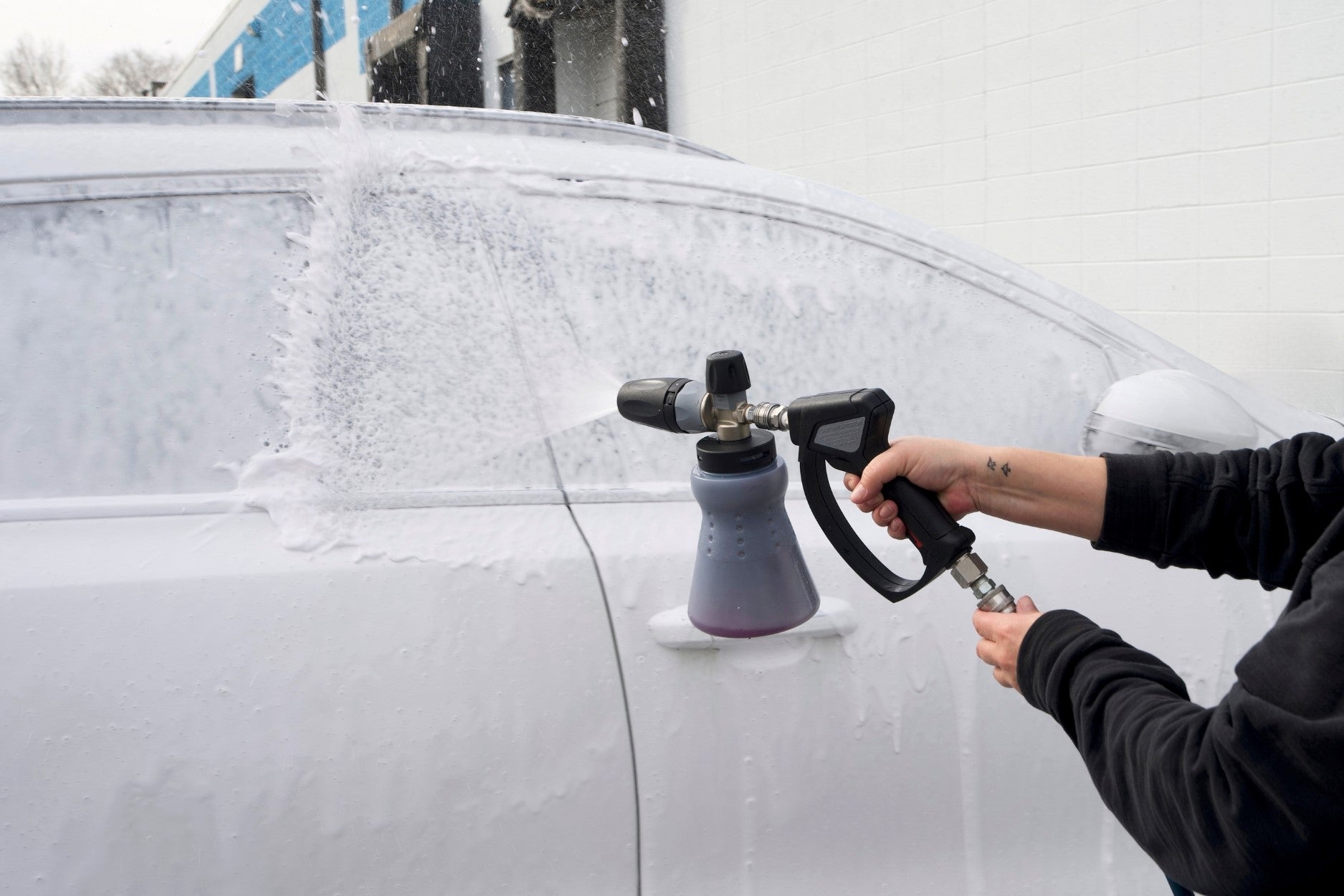
Low-pressure fan tip: General surface washing, such as siding, stucco, and wood
Downstream injection nozzle: Chemical application via pressure washer downstream
Rinse/soap nozzle combo: Two-step wash jobs, switching between apply and rinse
High-volume shooter tip: Tall elevations, long distance, tight area coverage
Matching nozzle to surface type
Roofs and gutters
Roof washing demands wide-angle, high-volume nozzles that can throw chemical up and across large surface areas with minimal direct pressure. A 25 to 40 degree fan nozzle at low PSI keeps granules intact on asphalt shingles while delivering enough SH-based mix to kill algae, moss, and lichen at the root.
Vinyl and wood siding
These surfaces are pressure-sensitive and prone to water intrusion if you're not careful. A wide fan nozzle at low volume prevents forcing water under lap siding while still delivering consistent chemical coverage.
Concrete and hardscapes
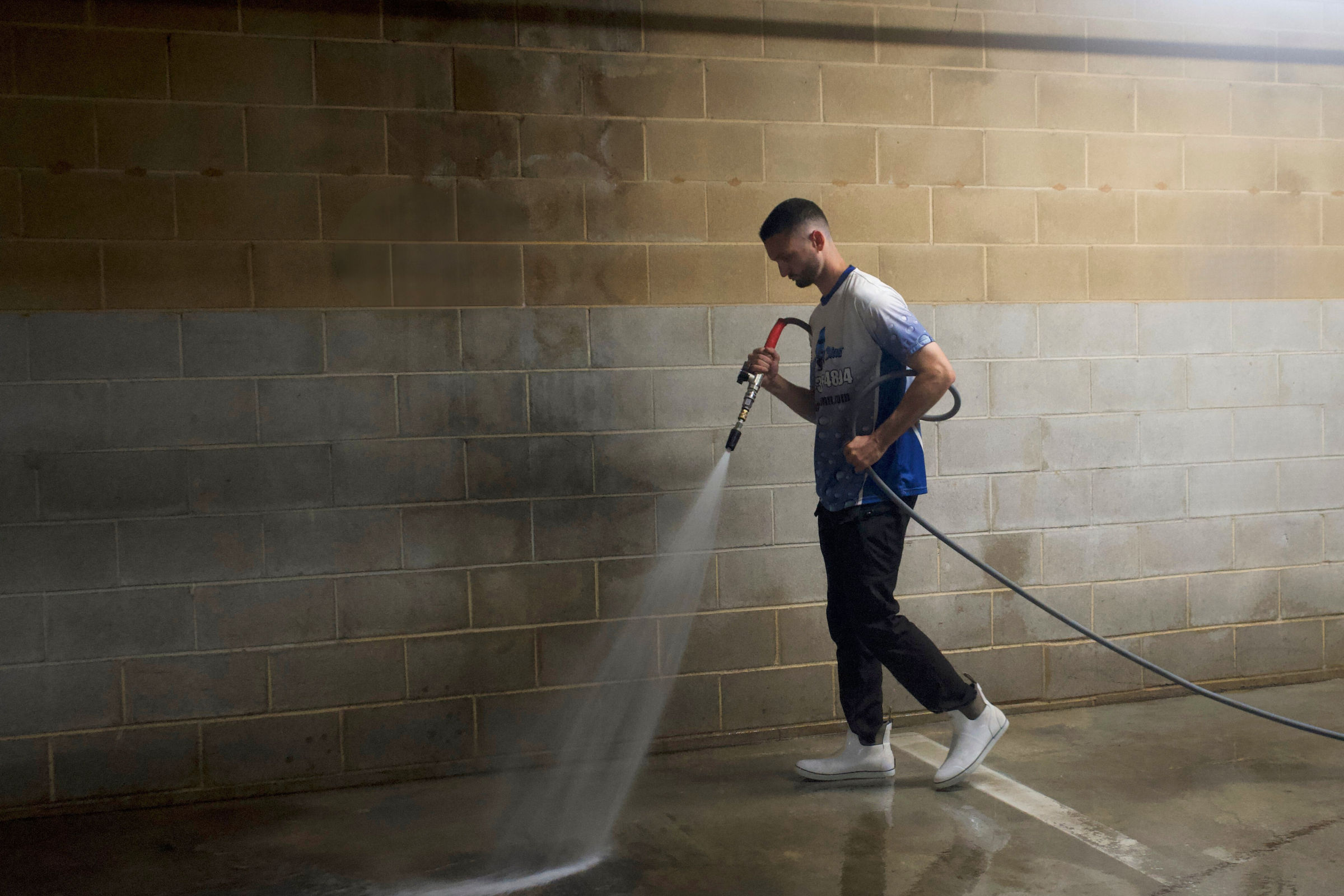
Soft washing concrete is about dwell time and even distribution, not raw pressure. A medium-angle fan tip gives you the coverage and flow rate to treat large flat areas without missing spots or creating dry patches.
For deeper cleaning, pairing your chemical application with a surface cleaner like a HydroJet EZ Glide surface cleaner can improve efficiency and consistency. Surface cleaners should always be used at the lowest possible PSI required to achieve the desired result, since excessive pressure can etch concrete. Pre-treating with a soft wash solution helps break down organic buildup, while post-treating can enhance brightness and eliminate any remaining deep-rooted growth.
Multi-story and high-elevation work
This is where nozzle orifice size and shooter tips earn their keep. You need enough velocity to reach 20 to 40 feet without losing your mix ratio to air dilution. Purpose-built shooter nozzles are designed for exactly this, delivering a tight stream with enough volume to stay effective at distance. AJH nozzles are a popular choice for this type of work because they provide reliable reach while maintaining consistent application.
Veloci's lineup of soft wash nozzles at mtmhydroparts.com includes purpose-built options for roof, siding, and high-elevation work. HydroJet ER Shooter Tips are long range shooter nozzles built to last. Their nozzle tips are precision-machined for consistent orifice sizing, which is critical when you're downstream injecting and need repeatable mix ratios from job to job.
Flow rate and orifice size: don't ignore the numbers
Nozzle orifice size directly controls your GPM output at a given PSI. In soft washing, where your SH concentration depends on that flow rate staying consistent, a worn or incorrectly sized orifice will throw off your mix. This can lead to under-treating a roof or over-applying on more delicate surfaces.
As a general rule, larger orifice means more volume and less velocity. Smaller orifice means less volume and more velocity, which can increase pressure beyond what is ideal for soft washing. Your nozzle should be properly sized to match your pump’s output so the system performs as intended.
Pro tip: Replace nozzle tips regularly, especially when running bleach-based mixes. Sodium hypochlorite is corrosive, and even stainless tips will wear over time, causing orifice drift that impacts flow rate and chemical ratios.
Material: stainless vs. plastic, brass, or aluminum tips
If you're running any SH-based solution, nozzle material matters. Standard brass and aluminum tips corrode quickly in the presence of sodium hypochlorite. Stainless steel is the industry standard for chemical soft washing because it holds up to repeated exposure and maintains orifice precision far longer than plastic, brass, or aluminum alternatives.
Product pick: Veloci's stainless soft wash nozzles, available at MTM Hydro Parts, are built specifically for chemical resistance. If you're doing regular roof or house washing with SH mixes, these are a straightforward upgrade from generic tips that degrade quickly.
Quick-reference: choosing your nozzle
Here’s the short version when you're standing at the rig deciding which tip to pull:
For roofs: AJH, wide fan, or shooter tip, stainless, matched to your pump's GPM
For siding: AJH, 40-degree or wider fan, low pressure
For concrete: Medium fan, consistent coverage pattern, let the chemical do the work
For multi-story: AJH or purpose-built shooter tip with enough orifice volume to reach elevation without losing mix ratio
The bottom line
The right soft wash nozzle is about matching tip geometry, material, and flow rate to the specific job in front of you. When those variables are dialed in, you get more consistent results, better chemical efficiency, and fewer call-backs.
A well-built nozzle setup improves every part of your workflow and helps you get the most out of your soft wash system.